Performance Marketing is one of the fastest-growing fields in the Digital Marketing Industry, for helping businesses to achieve measurable results through paid advertising. A Performance Marketing Course provides you better practical skills that are needed to run & optimize campaigns on platforms like Google Ads and Meta Ads. In this guide you’ll learn:What Performance Marketing is and how it works.
✅Why a Performance Marketing Course is important.
✅The skills, tools, and platforms covered in this course.
✅Career opportunities, salary, and future scope.
✅How to choose the right Performance Marketing Course for your goals.
✅Who should enroll, including students, professionals, freelancers, and business owners.
Whether you’re starting your career or upgrading your skills, this guide will help you make an informed decision.
What is a Performance Marketing Course?
A Performance Marketing Course is a Specialized Digital Marketing Program where you learn how to create, manage, track, and optimize paid advertising campaigns in platforms like Google Ads, Meta Ads, LinkedIn Ads, and YouTube Ads. Performance Marketing focuses on measurable results such as clicks, leads, sales, and return on investment (ROI). T
Course Overview
A well-structured Performance Marketing Course covers the essential concepts and tools required to become a successful Performance Marketer. During the course, you will learn:
➡️Google Ads and Meta Ads campaign setup.
➡️Keyword research and audience targeting.
➡️Conversion tracking using Google Tag Manager and Google Analytics 4.
➡️Meta Pixel implementation and campaign optimization.
➡️Budget planning, bidding strategies, and performance analysis.
➡️AI tools that improve campaign management and productivity.
Course Objective
The main objective of a Performance Marketing Course is to help learners develop practical skills that businesses actively seek. The course aims to:
➡️Build a strong foundation in paid advertising.
➡️Teach data-driven decision-making for better campaign performance.
➡️Improve lead generation and online sales strategies.
➡️Prepare learners for jobs, freelancing, or business growth.
➡️Enable learners to manage advertising budgets efficiently.
Industry Demand
The demand for skilled Performance Marketers continues to grow as businesses invest more in digital advertising. Companies across industries need professionals who can generate measurable results through paid campaigns. Startups, e-commerce brands, agencies, healthcare, education, and finance companies are actively hiring performance marketing professionals with practical experience.
Learning Outcomes
After completing a Performance Marketing Course, you will be able to:
- Create and manage high-performing advertising campaigns.
- Analyze campaign data and optimize performance.
- Track conversions and measure return on investment (ROI).
- Generate quality leads and increase online sales.
- Use industry-leading tools with confidence.
- Build a portfolio with practical projects and prepare for careers in performance marketing, freelancing, or entrepreneurship.
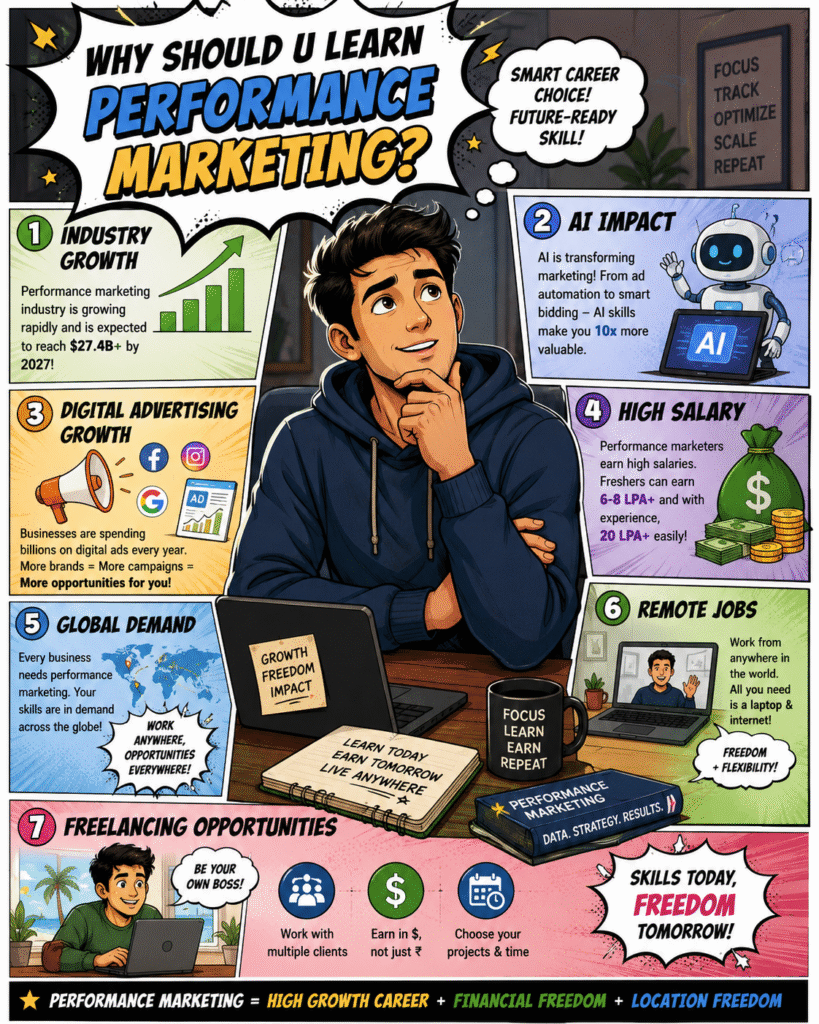
Why Should You Learn a Performance Marketing Course ?
1. Industry Growth
- More companies are spending money on digital ads instead of TV or newspapers.
- New agencies and startups are opening up, which means more jobs.
- Companies want people who know performance marketing, not just basic marketing.
- This field will keep growing in the coming years.
2. AI Impact
- AI now helps run ads, create designs, and find the right audience automatically.
- People who know how to use AI tools have an advantage over others.
- AI takes care of boring, repetitive tasks so marketers can focus on strategy.
- Good courses in 2026 teach you how to work with AI, not just do things manually.
3. Digital Advertising Growth
- Every year, more money is spent on digital ads compared to TV, print, or radio.
- Small and local businesses are also moving their ads online.
- Platforms like Google, Meta, and YouTube keep adding new ways to advertise.
- This growth means stable, long-term career options for marketers.
4. High Salary
- Performance marketers get paid well because their work directly brings sales and leads.
- If you show good results, you can ask for a higher salary easily.
- Special skills like running paid ads or improving conversions pay even more.
- Salaries in this field grow faster than in general marketing jobs.
5. Global Demand
- Companies from all over the world need performance marketers, not just local businesses.
- The skills you learn can be used to work with clients from any country.
- You don’t have to live in a big city to get good opportunities.
- Even small towns are now seeing demand for digital marketing skills.
6. Remote Jobs
- This job only needs a laptop and internet, so it’s easy to do from home.
- Many companies now hire performance marketers for full-time remote roles.
- You can work with brands from other cities or countries without moving.
- Remote work also gives you flexible working hours.
7. Freelancing
- Small businesses often can’t afford a full marketing team, so they hire freelancers.
- You can handle multiple clients’ ads and social media at the same time.
- As you gain experience, you can charge more for your work.
- It’s one of the easiest ways to start earning without a full-time job.
Who Should Join This Performance Marketing Course?
Students
- Students who want to build a career in digital marketing can start early with this course.
- It gives you practical skills that look good on your resume, even before you finish college.
- You can start freelancing or interning while still studying.
- It’s a great option if you don’t want a typical 9-to-5 job after graduation.
Freshers
- Freshers looking for their first job can use this course to stand out from other candidates.
- Companies prefer hiring people who already know how to run and manage ad campaigns.
- It helps you get placed faster since performance marketing is in high demand.
- You don’t need any prior work experience to learn this skill.
Working Professionals
- Professionals working in unrelated fields can switch to a digital marketing career.
- It helps you upgrade your skills without needing to go back to full-time education.
- You can learn this alongside your current job through weekend or evening classes.
- It opens doors to better-paying roles and new job opportunities.
Business Owners
- Business owners can learn to run their own ad campaigns instead of depending on agencies.
- It saves money since you won’t need to hire someone else to manage your marketing.
- You’ll understand exactly where your ad budget is going and what results it’s giving.
- It helps you grow your business faster with better online visibility.
Entrepreneurs
- Entrepreneurs can use these skills to promote their startups without a big marketing budget.
- It helps you make smarter decisions when hiring or working with marketing agencies.
- You can test and launch marketing campaigns quickly on your own.
- It gives you more control over your brand’s growth and customer reach.
Freelancers
- Freelancers can add performance marketing as a new skill to offer more services to clients.
- It allows you to charge more by handling ads, SEO, and social media together.
- You can work with multiple clients at once and grow your income.
- It’s a skill that’s always in demand, so you’ll rarely run out of work.
Marketing Professionals
- Marketing professionals can specialize further by learning performance-based strategies.
- It helps you move from traditional marketing roles to more result-driven roles.
- You’ll learn how to use data and analytics to improve your campaigns.
- This makes you more valuable and helps you take on senior positions faster.
What Will You Learn in a Performance Marketing Course?
A Performance Marketing Course provides practical training to help you create, manage, analyze, and optimize paid advertising campaigns. Here are the key topics covered in the course:
Google Ads
- Create Search, Display, Shopping, Video, and Performance Max campaigns.
- Learn keyword targeting and bidding strategies.
- Write high-converting ad copy.
- Optimize campaigns for better ROI.
Meta Ads
- Run Facebook and Instagram advertising campaigns.
- Create engaging ad creatives.
- Target the right audience using demographics and interests.
- Improve campaign performance through optimization.
YouTube Ads
- Launch video advertising campaigns.
- Increase brand awareness and engagement.
- Generate leads using video ads.
- Analyze campaign performance and viewer behavior.
Google Analytics 4 (GA4)
- Track website visitors and user behavior.
- Monitor conversions and important events.
- Analyze campaign performance.
- Generate data-driven insights.
Google Tag Manager (GTM)
- Install and manage tracking tags.
- Configure conversion tracking.
- Track user interactions without editing website code.
- Simplify marketing tag management.
Meta Pixel
- Install Meta Pixel on your website.
- Track leads and purchases.
- Build custom and remarketing audiences.
- Improve Facebook and Instagram ad performance.
Conversion Tracking
- Measure leads, sales, and form submissions.
- Track return on investment (ROI).
- Monitor campaign success accurately.
- Optimize campaigns based on conversion data.
Landing Page Optimization
- Improve landing page speed and performance.
- Create compelling call-to-action (CTA) sections.
- Enhance user experience (UX).
- Increase conversion rates.
Audience Research
- Identify your ideal customers.
- Analyze audience interests and behaviors.
- Build custom and lookalike audiences.
- Improve ad targeting accuracy.
Keyword Research
- Find high-intent keywords.
- Analyze keyword competition.
- Discover profitable search terms.
- Improve campaign relevance.
AI Tools for Performance Marketing
- Generate ad copy using AI.
- Create campaign ideas faster.
- Automate repetitive marketing tasks.
- Analyze campaign performance with AI tools.
Reporting and Analytics
- Create professional performance reports.
- Monitor KPIs and advertising metrics.
- Understand campaign insights.
- Present reports to clients and stakeholders.
Campaign Optimization
- Perform A/B testing.
- Optimize bids and budgets.
- Improve audience targeting.
- Scale high-performing campaigns for better results.
Performance Marketing Course Curriculum
A well-structured Performance Marketing Course combines theoretical knowledge with practical training to help learners master paid advertising. Below is a module-wise curriculum that covers the essential concepts and tools used by industry professionals.
1: Introduction to Performance Marketing
- Fundamentals of Performance Marketing
- Digital Marketing vs Performance Marketing
- Marketing Funnel and Customer Journey
- Key Performance Metrics (CTR, CPC, CPA, ROAS, ROI)
2: Google Ads
- Google Ads Account Setup
- Search Campaigns
- Display Campaigns
- Shopping Ads
- Video Ads
- Performance Max Campaigns
- Keyword Match Types
- Bidding Strategies
- Ad Extensions
3: Meta Ads
- Meta Ads Manager Overview
- Campaign Objectives
- Audience Targeting
- Ad Formats
- Budget and Bidding
- Campaign Optimization
- Retargeting Strategies
4: YouTube Advertising
- Lead Generation Campaigns
- Professional Audience Targeting
- YouTube Video Advertising
- Brand Awareness Campaigns
- Video Performance Analysis
5: Tracking & Analytics
- Google Analytics 4 (GA4)
- Google Tag Manager (GTM)
- Meta Pixel Setup
- Conversion Tracking
- Event Tracking
- UTM Parameters
6: Landing Pages & Conversion Optimization
- Landing Page Design Principles
- User Experience (UX) Basics
- Call-to-Action (CTA) Optimization
- A/B Testing
- Conversion Rate Optimization (CRO)
7: AI Tools for Performance Marketing
- AI-Powered Ad Copy Creation
- AI Image & Creative Tools
- Campaign Planning with AI
- Audience Research Using AI
- Performance Analysis with AI
8: Reporting & Campaign Optimization
- Campaign Performance Reports
- KPI Analysis
- Budget Optimization
- Bid Strategy Optimization
- Scaling Successful Campaigns
9: Live Projects & Practical Training
- Google Ads Live Campaign
- Meta Ads Live Campaign
- Lead Generation Project
- E-commerce Advertising Project
- Campaign Performance Review
10: Career Preparation
- Resume Building
- Portfolio Creation
- Interview Preparation
- Freelancing Guidance
- Client Acquisition Strategies
- Performance Marketing Certifications
Tools Used in Performance Marketing
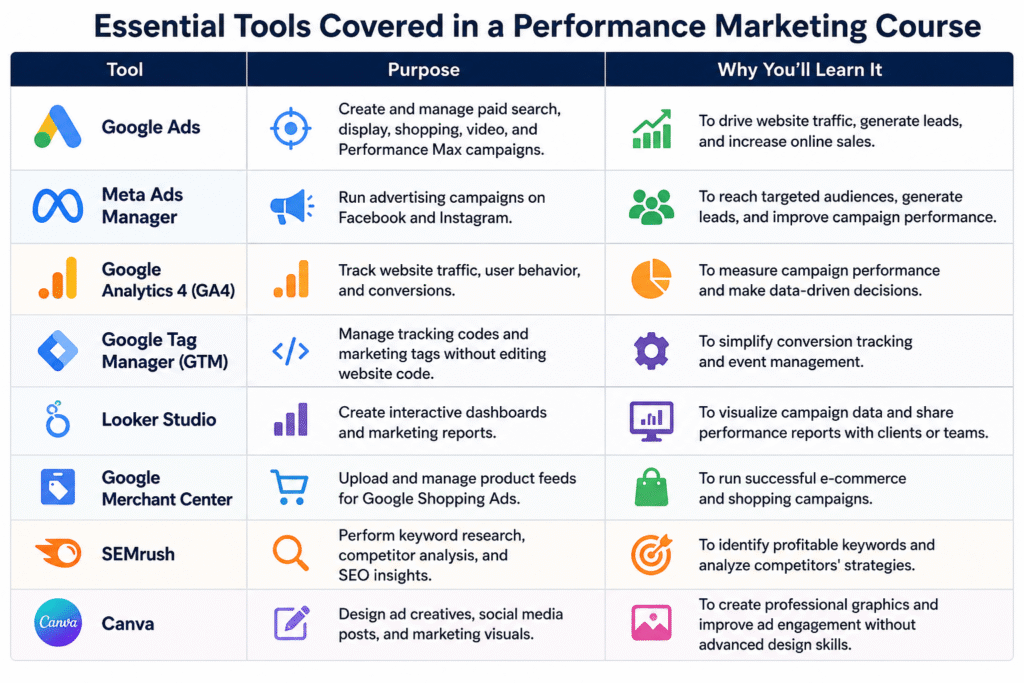
To become a successful performance marketer, it’s important to learn the tools used by industry professionals. A Performance Marketing Course provides hands-on training with leading platforms for campaign creation, audience targeting, analytics, conversion tracking, reporting, and creative design. Mastering these tools helps you run data-driven advertising campaigns, measure performance accurately, and achieve better marketing results. The table below highlights the essential tools you’ll learn and how each one contributes to building a successful career in performance marketing.
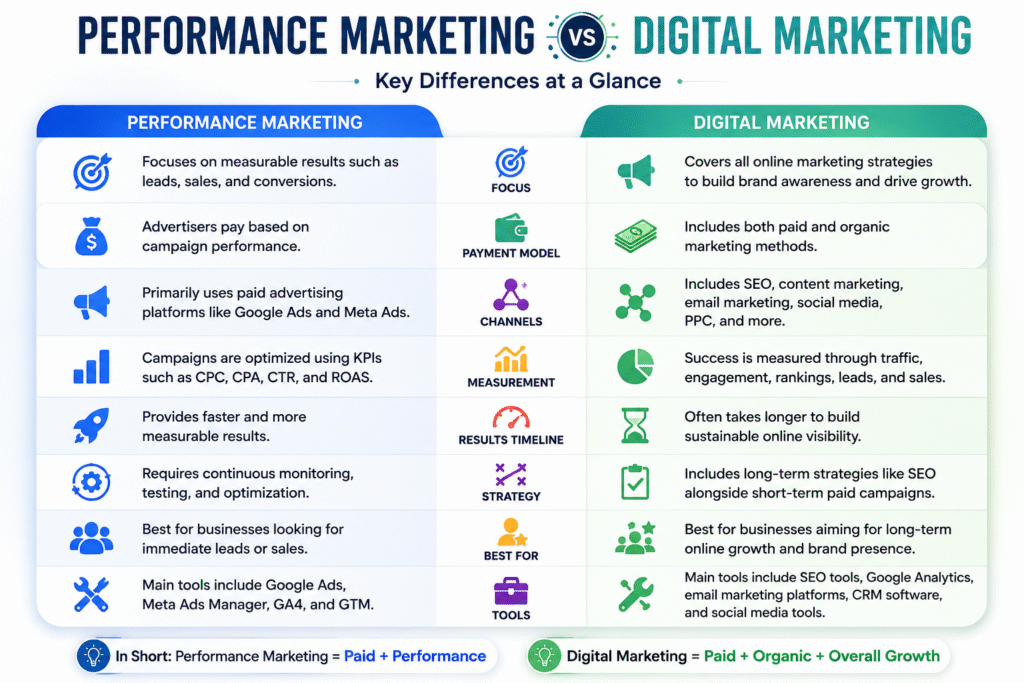
Performance vs Digital marketing
Choosing the right marketing approach is essential for achieving your business goals. While Digital Marketing covers all online marketing activities, Performance Marketing focuses specifically on delivering measurable results such as leads, sales, and conversions. Understanding the differences between these two approaches will help you select the right strategy based on your objectives, budget, and expected outcomes. The comparison below highlights the key differences between Performance Marketing and Digital Marketing, making it easier to understand their focus, channels, measurement methods, and career opportunities.
Top Industries Hiring Performance Marketers
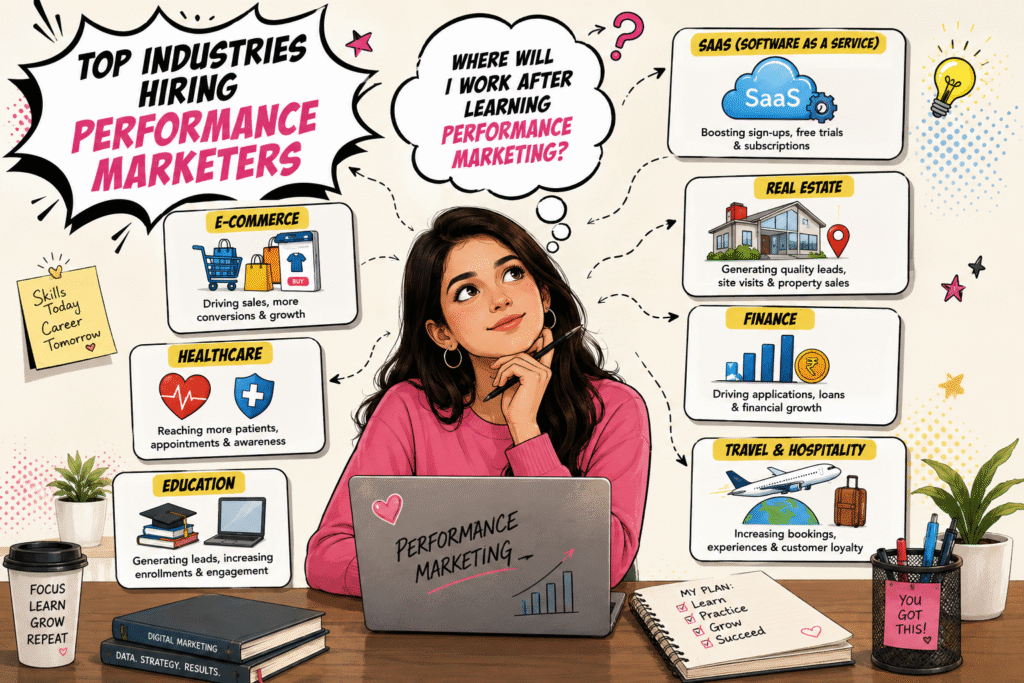
The demand for performance marketers is increasing across multiple industries as businesses invest more in digital advertising to generate measurable results. Some of the top industries actively hiring performance marketing professionals include:
E-commerce: Drive online sales through Google Shopping, Meta Ads, and Performance Max campaigns.
Healthcare: Generate patient leads and promote healthcare services through paid advertising.
Education: Run lead generation campaigns for schools, colleges, universities, and EdTech platforms.
SaaS (Software as a Service): Acquire high-quality B2B leads using Google Ads and LinkedIn Ads.
Real Estate: Generate property inquiries using search, display, and social media advertising.
Finance: Promote banking, insurance, loans, and investment services while optimizing cost per lead.
Travel & Hospitality: Increase bookings for hotels, flights, and holiday packages through targeted campaigns.
How to Choose the Best Performance Marketing Course
Choosing the right Performance Marketing Course plays an important role in building a successful career in paid advertising. A well-designed course should offer practical knowledge, industry-relevant tools, and real project experience instead of focusing only on theory. Before making a decision, compare different training programs carefully and evaluate the following factors.
1. Live Projects
Work on real advertising campaigns to gain hands-on experience. Practical exposure helps you understand how campaigns perform in real business situations.
2. Industry-Experienced Trainers
Learn from professionals who have managed Google Ads, Meta Ads, and other paid marketing campaigns. Experienced mentors share practical strategies and industry insights.
3. Placement Assistance
A quality course should provide resume building, mock interviews, career guidance, and placement support to help you secure your first job.
4. AI-Powered Learning
Modern performance marketing relies heavily on AI. Select a course that teaches AI tools for ad creation, campaign optimization, reporting, and audience research.
5. Industry Certifications
Look for training that prepares you for certifications from Google, Meta, or other recognized platforms. These certifications improve your professional credibility.
6. Internship Opportunities
An internship allows you to apply your learning to live projects while gaining valuable industry experience and confidence.
7. Updated Curriculum
Digital advertising evolves continuously. Make sure the syllabus includes Google Ads, Meta Ads, GA4, GTM, conversion tracking, Performance Max campaigns, and the latest marketing trends.
8. Practical Assignments
Assignments, case studies, and campaign simulations strengthen your understanding and improve your problem-solving skills.
9. Interview Preparation
A complete course should also include portfolio creation, interview questions, communication skills, and career guidance to prepare you for recruitment.
Before enrolling, compare the curriculum, trainer experience, student reviews, placement records, certifications, and practical learning opportunities. Selecting a Performance Marketing Course that emphasizes real-world training and updated industry practices will help you develop job-ready skills and build a successful career in digital advertising.
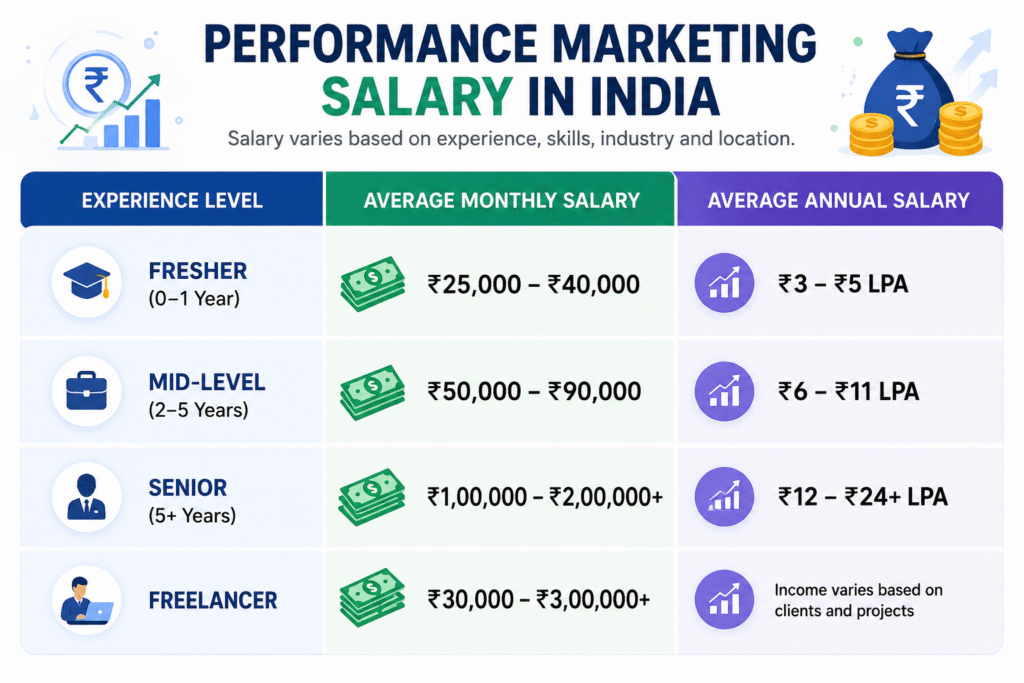
Performance Marketing Salary in India
The salary of a performance marketer depends on factors such as experience, skills, certifications, industry, and location. Professionals with expertise in Google Ads, Meta Ads, analytics, and campaign optimization often Earn Higher Packages.
Frequently Asked Questions (FAQs)
1. What is a Performance Marketing Course?
Performance Marketing Course is a creating, managing, and optimising paid advertising campaigns on platforms like Google Ads and Meta Ads. It included conversion tracking, audience targeting, analytics, and campaign optimization to generate measurable results such as leads, sales, and ROI, preparing you for jobs, freelancing, or business growth
2. Who should join a Performance Marketing Course?
Performance Marketing Course is ideal for students, freshers, working professionals, freelancers, entrepreneurs, business owners, and marketing professionals who want to build skills in paid advertising, generate measurable results, and grow their careers or businesses through digital marketing.
3. What skills will I learn?
You’ll learn Google Ads, Meta Ads, Google Analytics 4 (GA4), Google Tag Manager (GTM), conversion tracking, audience targeting, keyword research, landing page optimization, campaign optimization, reporting, and AI-powered marketing tools to run successful paid advertising campaigns.
4. What is the average salary after this course?
After completing a Performance Marketing Course, freshers can earn ₹3–5 LPA, while experienced professionals may earn ₹12–24+ LPA. Freelancers can earn ₹30,000 to ₹3,00,000+ per month, depending on their skills and clients.
5. Is a Performance Marketing Course worth it?
Yes. A Performance Marketing Course is worth it because it offers high-demand skills, excellent career opportunities, competitive salaries, and freelancing options. With practical training and industry-relevant tools, it helps you build a successful career in digital marketing.