What is Digital Marketing? What is the Scope of Digital Marketing?
Have you ever wondered why some brands appear everywhere on online platforms? From Instagram & YouTube videos to Google search and emails, businesses are trying to connect with their customers. All this work is called Digital Marketing.
What is Digital Marketing ?
Digital Marketing is the process of promoting Goods & Services through online platforms like search engines such as Google & Yahoo, Social Media platforms such as Instagram & Facebook, Email Marketing, websites, Mobile Applications, and Online Advertisements. Businesses use these online platforms to connect with their Target Audience, Generate Leads & Increase Sales.
In simple words Digital Marketing helps businesses to reach the right people at the right time through the devices they use every day.
Traditional Marketing v/s Digital Marketing
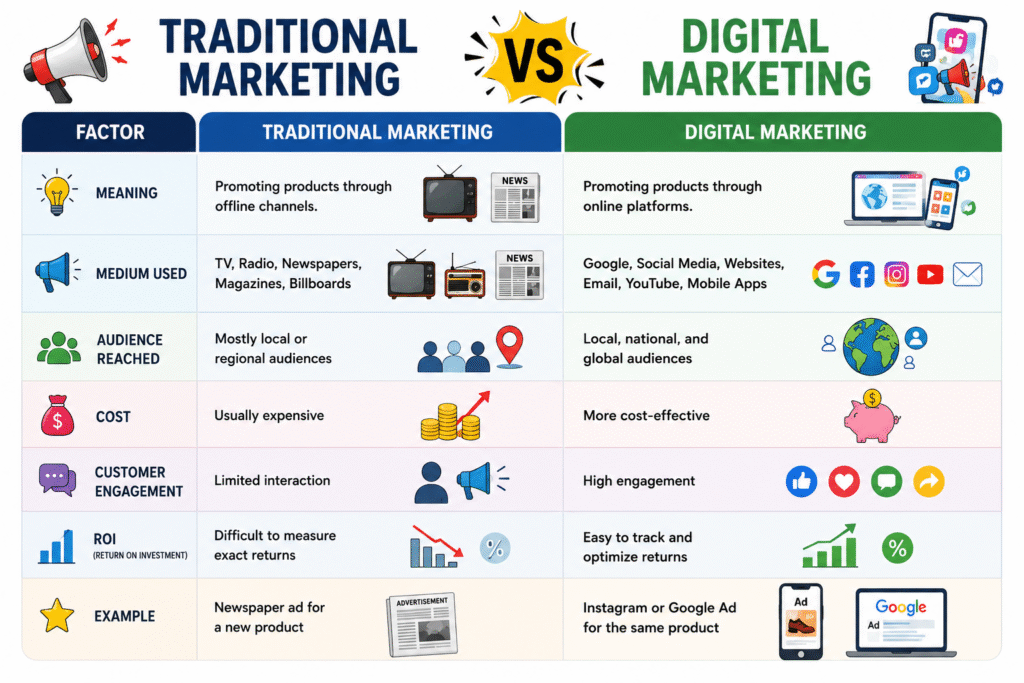
Before Digital Marketing businesses used newspapers, TV advertisements, radio, and pamphlets to promote their business. Using newspaper, TV advertisements, radio and pamphlets to promote business is called Traditional Marketing. But now people are used to spending most of their time on online platforms so businesses are using websites, social media, Google, emails, and mobile apps to promote their business called Digital Marketing. Both Traditional and Digital marketing methods aim to promote business, generate leads,increase sales & brand awareness.
Below is the major Difference between Traditional Marketing and Digital Marketing
Why is Digital Marketing Course Booming ?
Now, people spend more of their time online. Whether they are searching for information on Google, scrolling through social media, watching videos, or shopping online, the internet has become a part of everybody’s life. As a result, businesses must create a strong online presence to connect with their customers.
Here are a few reasons why digital marketing has become essential:
1. People Spend More Time Online
People today spend a large part of their life online whether they are using social media, watching videos & reels, reading reviews, or shopping. As customers are active on online platforms, businesses need to be present where their audience spends the most time.
2. It is Cost-Effective
Compared to traditional advertising, digital marketing allows businesses to reach targeted audiences with smaller budgets.
3. Results Can Be Measured
One of the biggest advantages of digital marketing is that businesses can track performance. They can see how many people clicked an ad, visited a website, or made a purchase.
4. It Helps Businesses Grow Faster
Digital marketing allows even small businesses to compete with larger brands by reaching customers through strategic campaigns.
Real-Life Example: Digital Marketing Is Already a Part of Our Daily Lives
Almost everything we do today involves digital platforms in some way. When we order groceries through Blinkit or BigBasket, buy clothes from Amazon or Myntra, book a cab using Uber or Ola, reserve train or flight tickets online, schedule doctor appointments through healthcare apps, or study using platforms like YouTube and online learning websites, we are interacting with businesses through digital channels.
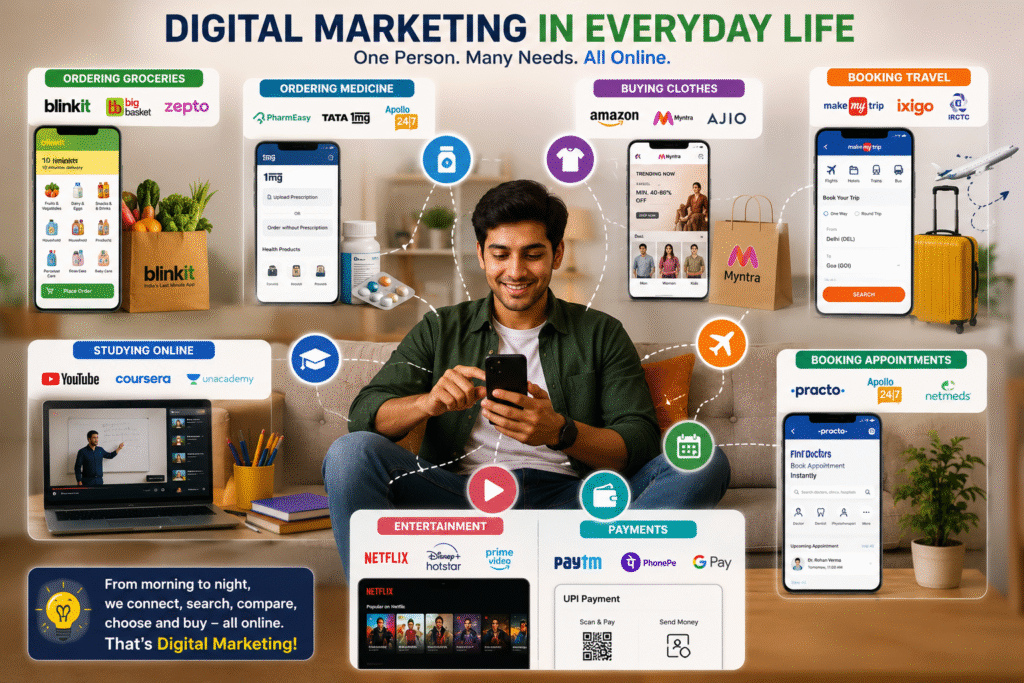
Everyday Examples of Digital Marketing
- 🛒 Ordering Groceries → Blinkit, BigBasket, Zepto
- 👕 Buying Clothes → Amazon, Myntra, Ajio
- 💊 Ordering Medicines → PharmEasy, Tata 1mg, Apollo 24/7
- 🚕 Booking Travel → Uber, Ola, MakeMyTrip, IRCTC
- 🎓 Studying Online → YouTube, Coursera, educational platforms
- 🏥 Booking Appointments → Practo, hospital websites and apps
In simple words, Digital Marketing is not the future anymore—it’s already a part of our everyday lives. From the moment we wake up until we go to sleep, we experience digital marketing without even realizing it.
This shift from offline to online is one of the biggest reasons why the scope of digital marketing is growing rapidly today.
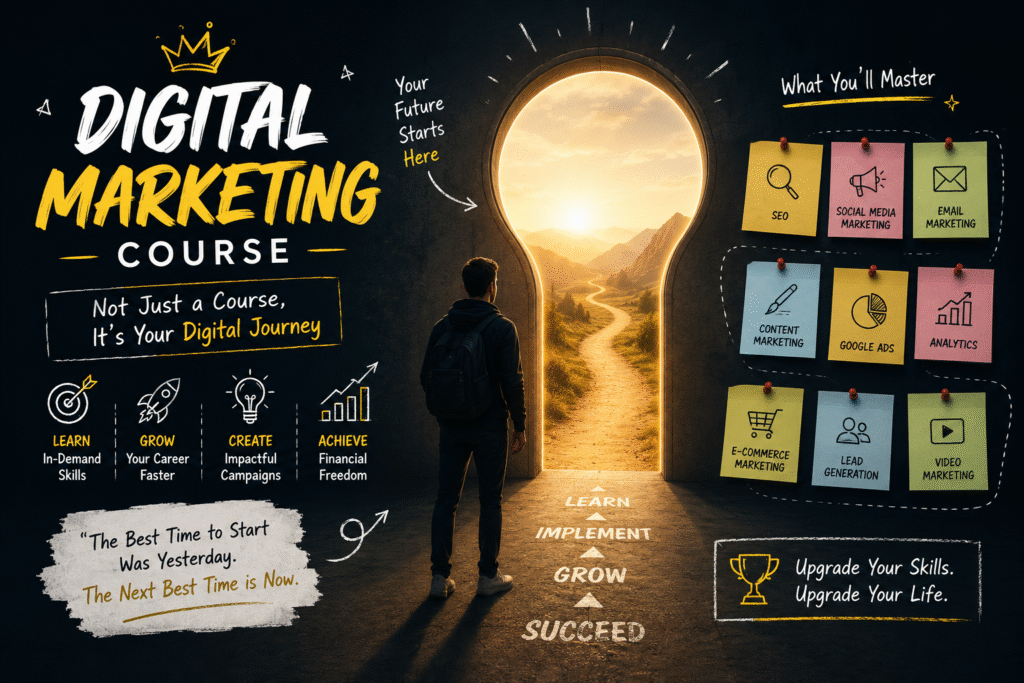
Main Components of Digital Marketing
Digital marketing is a broad field made up of several specialized areas. Understanding these components can help beginners identify their interests.
➡️Search Engine Optimization (SEO)
SEO is the process of improving a website’s visibility on search engines like Google or Yahoo.
The main goal is when someone searches for relevant information, your website should appear in the search results.
SEO includes:
- Keyword research
- On-page optimization
- Technical improvements
- Link building
- Content optimization
➡️Social Media Marketing (SMM)
Social media marketing means promoting businesses on social media platforms such as Instagram, Facebook, LinkedIn, and X.
Businesses use social media to:
- Increase brand awareness
- Engage with audiences
- Generate leads
- Drive website traffic
➡️Content Marketing
Content marketing focuses on creating valuable and informative content.
Examples include:
- Blog articles
- Videos
- Infographics
- Guides
➡️Pay-Per-Click Advertising (PPC)
PPC involves running paid advertisements on search engines and other platforms.
Businesses pay only when users click on their ads.
Popular examples include:
- Google Ads
- Social media advertisements
- Display ads
➡️Email Marketing
Email marketing remains one of the most effective digital marketing strategies.
Businesses use emails to:
- Share updates
- Promote offers
- Nurture leads
- Retain customers
➡️Affiliate Marketing
Affiliate marketing allows individuals to earn commissions by promoting products through referral links.
➡️Influencer Marketing
Brands collaborate with influencers to reach audiences in a more authentic and relatable manner.
How Does Digital Marketing Work?
Digital Marketing connects businesses with their audience through online channels. Here’s how it works:
➡️Search Engines (SEO & PPC): Companies optimize their websites to rank higher on Google or pay for ads that appear in search results, driving targeted traffic.
➡️Social Media: Platforms like Instagram, Facebook, and LinkedIn allow brands to engage directly with users through organic posts or paid advertisements tailored to specific demographics.
➡️Content Marketing: Blogs, videos, and infographics attract and educate potential customers, building trust over time without directly pushing a sale.
➡️Email Marketing: Businesses nurture leads by sending personalized messages, offers, and updates directly to subscribers’ inboxes.
➡️Data & Analytics: Every click, view, and purchase is tracked. Marketers use this data to refine campaigns and improve ROI.
Together, these channels create a connected strategy that guides a stranger from awareness to loyal customers — all happening online, 24/7.
Attract Visitors → Engage Them → Generate Leads → Convert into Customers → Build Long-Term Relationships.
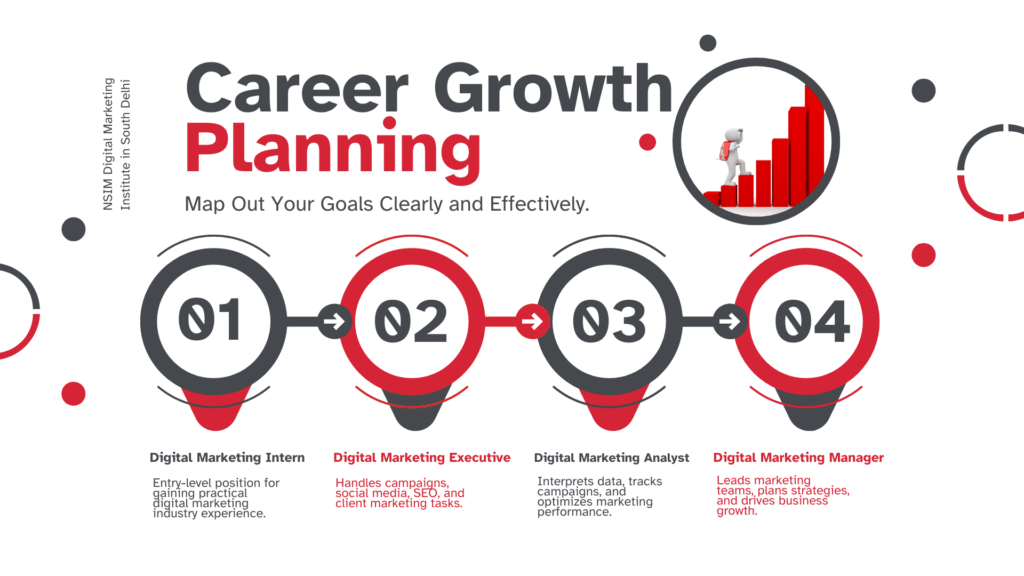
What is the Scope of Digital Marketing Course ?
India has over 800 million internet users. That number is still growing. Every single one of those people is on their phone, watching reels, reading articles, clicking on ads, and buying things online. Brands want to reach them — and they are spending serious money to do it.
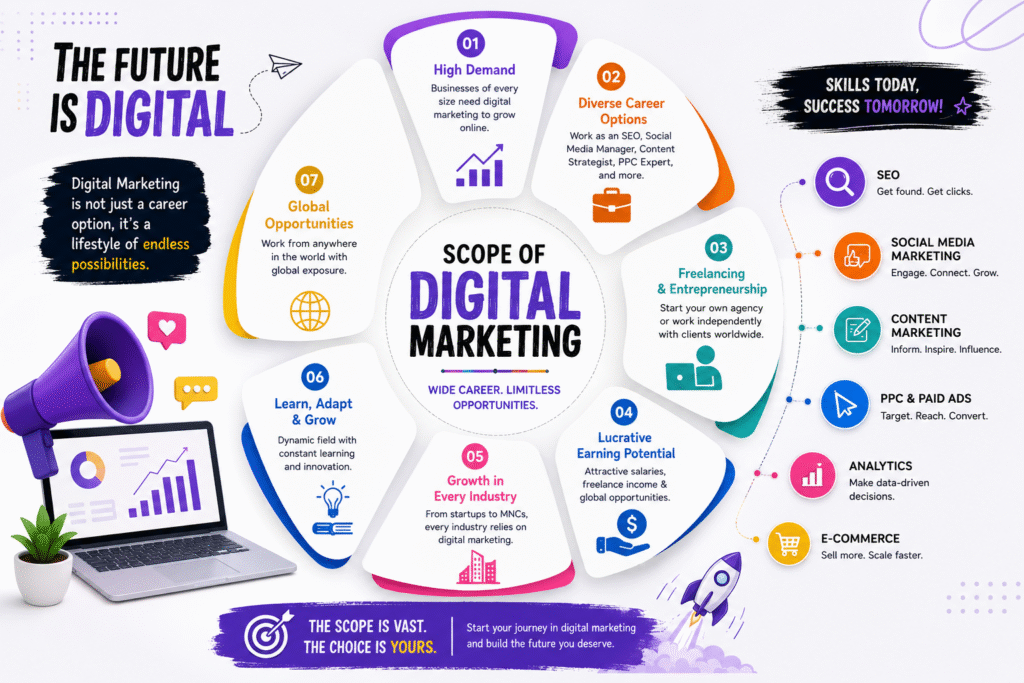
This is why Digital Marketing is one of the fastest-growing career fields in the country. Companies aren’t just looking for one marketing person anymore. They need entire teams — writers, analysts, ad managers, SEO experts, social media managers.
What kind of roles can you actually get?
✅SEO specialist
✅Social media manager
✅Content writer
✅Performance marketer
✅Digital Marketing Expert
✅Digital Marketing Manager
✅Performance Marketer
✅Google Ads Specialist
✅Email Marketing Executive
✅Freelancing
✅Entrepreneur
Why Everyone, from Housewives to Students, Needs Digital Marketing Knowledge
Today, almost everyone uses online platforms in their daily life. Housewives order groceries and medicines online, students study through YouTube and learning apps, and professionals book tickets and appointments using mobile apps. The advertisements we see on Google, Instagram, YouTube, and shopping websites are all part of digital marketing. Understanding Digital Marketing helps us make better online decisions and use these platforms wisely. It can also create career, freelancing, and business opportunities.
In simple words, if you use the internet every day, knowing the basics of Digital Marketing is no longer an option—it’s a useful life skill
Frequently Asked Questions
What is Digital Marketing?
Digital Marketing is the promotion of products or services using digital channels like Google, social media, websites, and email. It helps businesses connect with customers online.
What is the difference between Digital Marketing, Online Marketing, and Internet Marketing?
Digital marketing includes all digital channels, while online and internet marketing focus only on internet-based activities. In simple terms, online and internet marketing are parts of digital marketing.
What is the Scope of Digital Marketing?
The scope of digital marketing is huge as businesses are moving online. It offers career opportunities in jobs, freelancing, entrepreneurship, and remote work.
Is Digital Marketing Course a good career for freshers?
Yes. Digital marketing offers multiple entry-level opportunities, practical learning experiences, and strong career growth potential.
Do I need coding knowledge to learn Digital Marketing Course?
No. Basic technical understanding is helpful, but coding is not mandatory for most digital marketing roles.
How long does it take to learn Digital Marketing Course?
The learning period depends on the course and practice level. However, beginners can develop foundational skills within a few months.
Can I work as a freelancer after learning Digital Marketing?
Yes. Many professionals start freelancing after building practical experience and developing a portfolio.