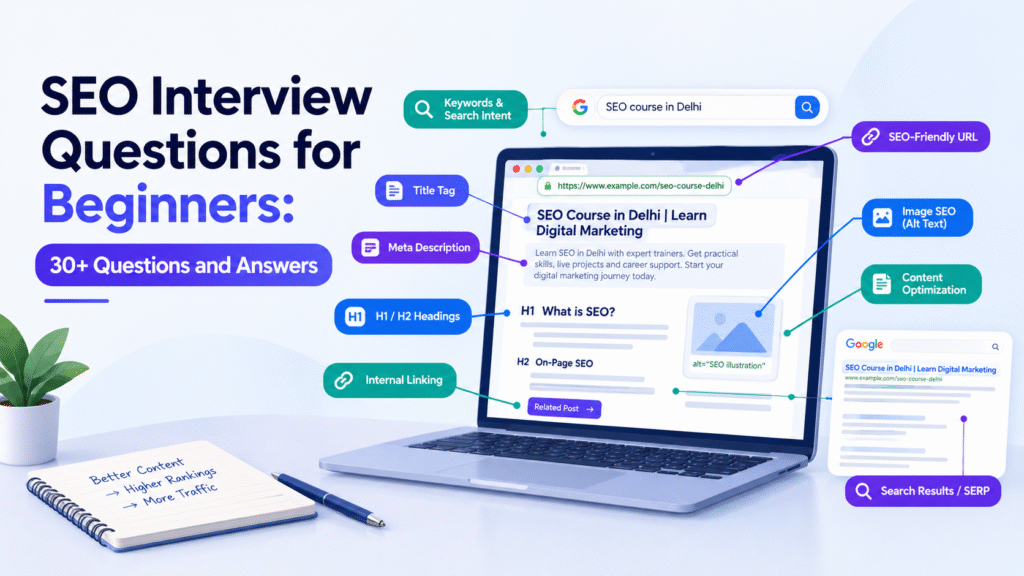
Preparing for Your First SEO Interview
Your first SEO interview can be quite intimidating, especially if you do not know what you will be asked about. You can have a good understanding of SEO, but in an interview, it is a different matter altogether.
An SEO interviewer will typically go further than just definitional knowledge. They might check your knowledge of the basics of SEO, of the way search engines function, of typical SEO Tools, or what you would do in response to a real website issue.
So, that is the reason behind why this guide is not going to have a list of SEO interview questions and answers. It begins with the basic concepts and moves onto practical and scenario-based questions which could check the problem-solving abilities.
Don’t memorize our responses! Know the concepts and talk about them in your own words. You want to be able to hold a good level of confidence with regard to the idea so that you can quote similar data in a different way.
What Does an SEO Interviewer Expect From a Beginner?
For an SEO fresher, the interviewers don’t expect you to know everything. They want to see if your fundamentals are okay and you are able to relate what you know to a real website.
SEO Fundamentals
You should be comfortable with the concepts of keywords, search intent, crawling and indexing, on page and off page SEO, technical SEO. If you know these ideas you will have an easier time with the more practical questions.
Practical Understanding
Even if you know the definition. The interviewer may ask you how you can fix the page, fix an SEO issue, or fix the page which hasn’t ranked.
Tool Familiarity
Understand how to work with tools such as Google Search Console, Google Analytics, Ahrefs, Semrush and Screaming Frog – more to come.
Problem-Solving Ability
SEO typically is about finding out what’s wrong. An interviewer will give you a situation, and they will check how logically you can rationalize it.
Honest Communication
You don’t require any experience when you are a fresher. Just be true to what you have learned from your courses, projects, internship or personal website.
Q1. What should an SEO fresher know before appearing for an interview?
Interview-ready answer:
As a fresher in SEO I should have the knowledge on SEO basics such as, Keyword research, Search intention, On page SEO, Off page SEO, Technical SEO, Crawling, Indexing, And basic SEO analytics I need to have a basic knowledge of tools like Google Search Console, Google Analytics. But then I should be able to say how I can apply my knowledge into an actual website.
Q2. How should a fresher answer an SEO question they don’t know?
Interview-ready answer:
I will be honest rather than giving wrong answers or thinking on the spot. I would say that I am not totally sure of the answer but I would give whatever I know about the particular topic( if it is relevant). As a fresher I believe that saying I am willing to learn is better than acting as I know.
Q3. How can you demonstrate SEO knowledge if you don’t have professional experience?
Interview-ready answer:
I can provide evidence of my skills by completing a project, in coursework, during an internship or even by talking me through how I would approach optimising a site sample. For example I could demonstrate how I did keyword research, optimised a page, checked for indexing in search console or competitors. This demonstrates I have a practical understanding of SEO, even if I lack professional experience.
Basic SEO Interview Questions for Beginners
These are the simple SEO topics which you must know before attending an interview. Not just remembering the definitions, but you should know how SEO is related to search engines, users, and business.
Q4. What is SERP?
Interview-ready answer:
A Search Engine Results Page or SERP, is the page of results returned after a query is entered into the search engine. The SERPs display an output of the search results as well as other elements such as paid advertisements, image results, videos, snippets and local listings. SEO experts are keen observers of SERPs.
Q5. Why is SEO important for a business?
Interview-ready answer:
SEO will make your business more discovered by those searching for exactly what you provide or are interested in your field of business. SEO will assist in creating organic traffic to your website and not charging you for every visitIn addition to that, it can help with long tail search traffic and targeting searchers exactly when they are looking for you.
Q6. How does SEO help a website get organic traffic?
Interview-ready answer:
SEO builds a website that is understandable to search engines, as well as other essential elements that make the page relevant and eligible to appear in results. This means that the page will get clicks, which would otherwise not be possible unless the company pays for them. For instance, if the website has an informative page on ‘digital marketing courses in Delhi’ that has been properly optimized, it may attract users looking for such information.
Q7. What are the main types of SEO?
Interview-ready answer:
There are three main types of SEO off-page, on page, and technical SEO. On-page SEO refers to the optimization of a website’s content, page titles and headings, and links within the site to other pages of that website. Backlink building is the primary feature of off-page SEO that refers to optimizing a website’s reputation and popularity. Technical SEO is the aspect of SEO that ensures web pages are accessible to search engine spiders.
Q8. What is organic search?
Interview-ready answer:
Organic search is the unpaid, natural listings which are displayed on a search engine page. For example, a user can go to ‘best seo course in delhi’ to see the general listings when clicking a result that was not paid for which is also called organic traffic. The pictured result below is entirely different from one generated from a paid search result.
Q9. What is the Difference Between SEO And SEM?
Interview-ready answer:
The principal difference between SEO and SEM is that Search Engine Optimization concentrates on the growth of the number of users who can reach the company by organic search. Meanwhile, Search Engine Marketing is based on the concept of buying the ads placed directly in the search engine. The key difference between SEO and SEM is the period during which the company wants to improve its ranking.
Q10. What is search intent?
Interview-ready answer:
Search intent is the reason or the aim of the query. In other words, it is a searchers’ objective when they perform a search. For instance, you can guess that the person searching “what is SEO” is looking for information while the one searching “buy running shoes online” has an obvious purchase intent. By understanding what people search for, we can provide the appropriate content for them.
Q11. What are the main types of search intent?
Interview-ready answer:
Types that have been discussed are informational, navigational, commercial investigation, transactional intent. Typically if people are searching for something informationally they are seeking to learn about it, navigationally they are searching for a specific page, commercials are searching for something to purchase and transactional are seeking to do something.
Q12. What is the difference between SEO and paid search?
Interview-ready answer:
SEO is about getting the best position in the organic search results, whereas with paid search, you need to bid for ads. When it comes to the latter, you’ll have to pay for the services offered by search engines. With SEO, you may need to invest more time, but it can work exponentially. Both paid and organic are great options for any search marketing strategy.
Q13. Is SEO a one-time activity or an ongoing process?
Interview-ready answer:
SEO is a continuous process. It’s not just a one-off task. Search patterns, your competitors, websites, content, search engine algorithms can change. We optimise your website and then you need to look at performance, identify issues, update content if required and seek out further opportunities. So, SEO is a process of continual testing, enhancement and measurement.
How Search Engines Work
Before knowing advanced SEO, a novice needs to learn how search engines use algorithms to find, analyze and display web pages. Search engines employ bots to find pages on the internet and compile a list of the items they find. They then analyze the data on these pages and store information about them.
Q14. How do search engines work?
Interview-ready answer:
Search Engine usually works on crawling web pages, processing and comprehending their contents and saving information about the pages that can be indexed. The search engine pulls out the relevant information when someone searches for something and organizes the eligible results following numerous signals. Therefore, the process flow includes Crawl → Process → Index → Retrieve and Rank → Serve results.
Q15. What is crawling?
Interview-ready answer:
Crawling refers to the process of discovering and fetching web documents by using various crawlers or Googlebot in Google’s case. As such, search engines have various ways of finding URLs, including following links and reading sitemaps and other sources. However, crawling is not an indication that the page will be indexed.
Q16. What is indexing?
Interview-ready answer:
Indexing is when a search engine analyzes a page of data and then stores it so it can be shown in a result if need be. Crawling a page doesn’t necessarily mean it will be indexed; it’s up to the search engine which pages to index and what pages to include.
Q17. What is ranking?
Interview-ready answer:
Where a page ranks in the listing of results returned for a particular search. Search engines utilize hundreds of signals to rank scores of algorithms that operate together to produce the rankings and also specify which results are to be shown for a provided search.
Q18. What is the difference between crawling, indexing and ranking?
| Process | Simple Meaning |
| Crawling | Discovering and fetching a web page |
| Indexing | Analyzing and storing information about a web page |
| Ranking | Ordering eligible results for a search query |
Interview tip: You can crawl a page without indexing it, so these three terms are not interchangeable.
Q19. Can Google crawl a page but not index it?
Interview-ready answer:
Yes. It means Google has looked at the page, literally by crawling it. However, it might not actually be indexed. Google might choose not to index the page for a variety of reasons – it wasn’t considered appropriate to index, or there could be underlying quality or technical issues.
Q20. How would you check whether a page is indexed?
Interview-ready answer:
The first step I would take is to make a page level diagnostic request through Google Search Console’s URL Inspection tool. I can also do a basic secondary check using Google site: search, but for a direct page level diagnosis I will want to use Search Console. I would diagnose the reason the page isn’t indexed.
Keyword Research Interview Questions
Keyword research is not only understanding the search volume of the keywords. But a good SEO must try to understand, what are they searching for, why are they searching and what to consider as a query matching to the page. The questions listed below will include some of the keyword research topics a fresher needs to know for an SEO interview.
Q21. What is a keyword in SEO?
Interview-ready answer:
Put simply it is a word or phrase searched in a search engine to retrieve the information desired by the user. When doing SEO, keywords are the terms used to describe a search term and generate related contents.
Q22. What is keyword research?
Interview-ready answer:
Keyword research denotes a procedure of identifying and examining the keywords relating to our website, business, or a certain topic. It uncovers the demand, competition, and intent of the keywords to identify appropriate keywords for our contents.
Q23. How do you perform keyword research for a new website?
Interview-ready answer:
Firstly I would research the site, what it sells or does, who for and then come up with ideas of keywords and then research these using tools such as Google Adwords, Google Search Console, Ahrefs or Semrush to look for similar keywords, search volume, competition etc. Then I would research the search intent and the SERPS to see what type of content Google prefers to display for each keyword. Finally, I would group the relevant keywords and map those to relevant pages rather than aiming for all the keywords for that page.
Q24. What is the search volume?
Interview-ready answer:
Search volume is the amount of estimated searches for a given keyword in a period of time, typically a month. When looking at search volume I like to understand the search demand that the keyword has but I wouldn’t select a keyword solely based on the search volume.
Q25. What is keyword difficulty?
Interview-ready answer:
One of the other metrics given in SEO tool is keyword difficulty – how difficult it would be to rank for that specific keyword. But these metrics and calculations are done differently and I wouldn’t rely too much on that score, neither give much weight on the calculation because it isn’t even an official Google metric.
Q26. What is a long-tail keyword?
Interview-ready answer:
A long tail keyword is essentially a more specific search query with more than three very specific words, such as ‘best digital marketing course for beginners in Delhi’. Digital marketing course is a relatively broad keyword.
Q27. What is the difference between short-tail and long-tail keywords?
| Short-tail Keywords | Long-tail Keywords |
| Usually broader | Usually more specific |
| Can have wider search intent | Often have clearer intent |
| May have higher competition | Can be more targeted |
| Example: “SEO course” | Example: “SEO course for beginners in Delhi” |
Interview-ready answer:
The only difference between short-tail and long-tail keywords is that short-tail keywords are common, whereas long-tail keywords are longer and more specific.
Q28. What are primary and secondary keywords?
Interview-ready answer:
A primary keyword is the primary phrase for which an entity is being optimized. Secondary keywords are closely connected phrases and variations of a primary keyword. For instance, “SEO interview questions” would be the primary keyword for a page, and “SEO interview questions for freshers” would be the secondary keyword.
Q29. How do you choose the right keyword for a page?
Interview-ready answer:
If I was to select a key term I would consider a handful of things rather than the one with the biggest volume, Firstly I would always ensure that the key term is relevant for the page and matches the intent of why a user would search for it then I would consider demand on search, level of competition for the key term, the current SERP & demand your site can meet well. Finally I would choose what is most relevant to the page’s intent.
Key point:
Relevance + Search Intent + Search Demand + Competition should be considered together.
Q30. Why is search intent important during keyword research?
Interview-ready answer:
Search intent is essentially the meaning of what the user wants. A keyword has excellent volume, but if our page isn’t a match for the user’s intent behind that search, then the user isn’t going to get their desired end goal. For instance, searching for a keyword may be because someone is wanting to compare many products, when our page promotes only a single item. That’s why I look at the SERP and the intent first.
Q31. What is keyword stuffing?
Interview-ready answer:
Keyword stuffing is when a writer uses too many keywords on a page in an attempt to manipulate search engine results.Keyword stuffing tends to have negative effects for users since it makes the text difficult to read and goes against Google’s spam policies.Keyword stuffing does not add value,so keyword placement should be left to where they are most needed.
Q32. Is keyword density a ranking factor?
Interview-ready answer:
No, there is no ideal percentage of keyword density that can be said to help rankings. I would write useful, relevant content that describes the topic properly than repeat a keyword so many times to reach some percentage of keyword density. You want to fulfil the user’s search intent, not reach some score.
On-Page SEO Interview Questions
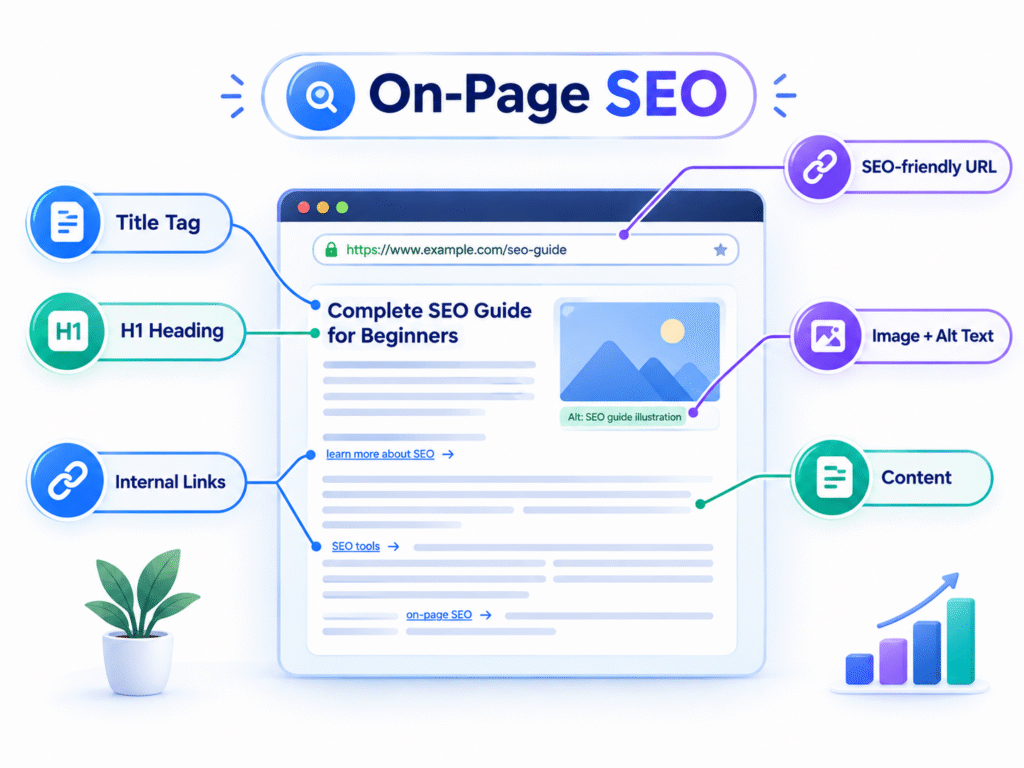
On-page SEO has to do with optimizing the features and content of a webpage for better comprehension by search engines and accessibility by users. From the beginner’s perspective, you need to understand the meanings of every element and also how to use it effortlessly.
Q33. What is on-page SEO?
Interview-ready answer:
On page SEO refers to the internal factors that influence a webpage’s ranking in the results. On-page SEO includes things like the content, title tags, headings, URLs, internal linking structure, and images.
Q34. How would you optimize a webpage for a target keyword?
Interview-ready answer:
First I would identify the search intent around the target keyword and study the current search results. Then I would deliver valuable content that meets that intent and naturally include the keyword if appropriate, for example, in the title, main heading, URL and content. Then I would optimize images, internal links and other on page factors as needed and check the page from the user and SEO point of view instead of copying the phrase.
Q35. What is a title tag?
Interview-ready answer:
A title tag is a piece of HTML that indicates the title of a web page. Search engines interpret the page’s subject from the tag and its contents, and it can also be shown as the heading of a listed result. Effective titles should accurately show the content of a page and attract the correct target user.
Q36. What makes a title tag SEO-friendly?
Interview-ready answer:
Your SEO title is what appears in the search engine results and it should be human-centric, descriptive, relevant to the document and clear. I would naturally include the main keyword/topic in the title as it reads naturally, remove the appendage that is not needed and ensure it is relevant to the page.
Q37. What is a meta description?
Interview-ready answer:
The meta description is an HTML attribute which summarizes the contents of the page. They are sometimes used by search engines to display preview snippets for each page in the search results. The description can be used to help people better understand what a page is about and be a factor for the user to click.
Q38. Does a meta description directly affect Google rankings?
Interview-ready answer:
No, but it is useful even if it is not a ranking factor. It can affect how your search result is displayed to users and can potentially help generate relevant clicks. So, I would generate for users rather than thinking of it as a ranking factor.
Q39. What are heading tags and why are they used?
Interview-ready answer:
H1, H2, and H3 tags are used to create a logical hierarchy of the page content. The purpose of these tags are both to help the page be scanned more easily by humans, and to show the structure of the content. For example, the H1 could be the main idea, with H2s and H3s becoming sub-topics.
Q40. How should headings be structured on an SEO-friendly page?
Interview-ready answer:
I would use the heading levels according to the content hierarchy. There should be a main heading for the page, with sections and subsections that are relevant. For instance, an H2 could introduce a topic and an H3 the related sub-topic under it. I wouldn’t use the heading level just to include keywords.
Q41. What makes a URL SEO-friendly?
Interview-ready answer:
An SEO friendly URL should be short and descriptive for both search engines and people visiting your site. I think it’s best to make it as relevant as possible to the page content without including any unnecessary parameters or complicated language. Avoid using words that don’t have any meaning to people who visit your website.
Example:
/seo-interview-questions/ is clearer than a URL containing random numbers or unrelated characters.
Q42. What is internal linking?
Interview-ready answer:
Internal linking refers to connecting a web page to another web page on the same website. For instance, a keyword research blog can link to another keyword research page or post or an on-page SEO blog.
Q43. Why are internal links important for SEO?
Interview-ready answer:
Internal links help both users identify related content and search engines identify the relationship between two or more documents on a website. In addition, they allow search engines to discover and crawl other pages. I would use relevant internal links when they make sense to the user and not add them when they are not needed.
Q44. What is image SEO?
Interview-ready answer:
Image SEO refers to the optimization of the images on a website so that they assist in the user’s experience and search discoverability. It involves relevant image file names & alt text, selecting the right formats & sizes, and optimizing the images for performance.
Q45. How do you optimize images for SEO and performance?
Interview-ready answer:
I would optimize the images by choosing the appropriate format and size to ensure that they do not slow down the page’s loading time. Furthermore, I would be sure to give the files appropriate names and add descriptive alt text to any image that requires it. Lastly, I would make sure not to upload larger images than needed and make them appear at a suitable size.
Q46. How do you optimize content without keyword stuffing?
Interview-ready answer:
Good article you gave. I would give more attention to theme and not repeat the keyword several times, I would try to meet the search intent of the user. I would do this with the use of the keyword in various places, covering different subtopics related to the keyword and answering different questions that the user might have, and as written in the article to be easy to read and comprehend. If it is used in some sentence then it would be better to use some other natural language instead of the keywords.
Off-Page SEO and Backlink Interview Questions
Off-page SEO is mainly about signals and activities that happen outside your own website. For beginners, the most important concepts to understand are backlinks, relevance, link quality, anchor text, and ethical link building. The goal is not to collect as many links as possible, but to build genuine authority and credibility.
Q47. What is off-page SEO?
Interview-ready answer:
Off-page SEO refers to activities outside a website that can help improve its visibility, reputation, and authority. Backlinks are one of the most important parts of off-page SEO, but it can also involve other activities that help build awareness and credibility around a website.
Q48. What is a backlink?
Interview-ready answer:
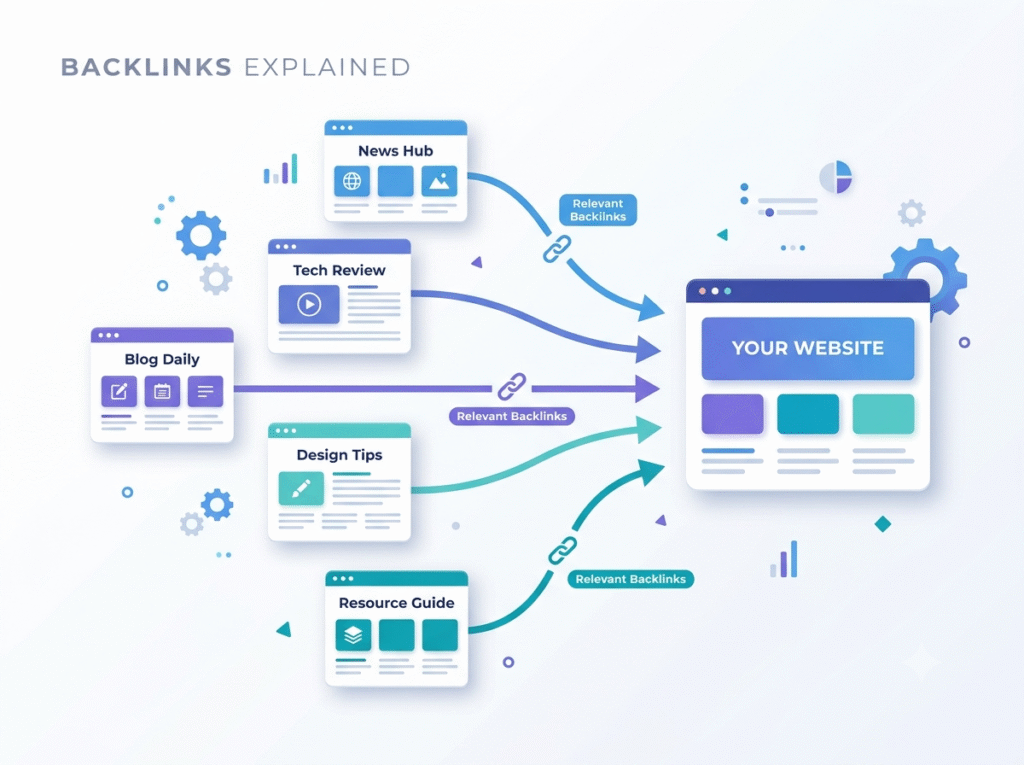
A backlink is a link from one website to another website. For example, if a digital marketing website links to an SEO guide on another website, that link is a backlink for the receiving website.
Q49. Why are backlinks important in SEO?
Interview-ready answer:
Backlinks can help search engines discover pages and can act as signals that other sites find a page useful or relevant. However, not every backlink has the same value. The quality, relevance, and context of a link matter more than simply having a large number of backlinks.
Q50. What makes a backlink high quality?
Interview-ready answer:
A high-quality backlink generally comes from a relevant and trustworthy website and is placed naturally within useful content. I would look at factors such as topical relevance, the quality of the linking website, and whether the link provides genuine value to users. I would focus on earning relevant links rather than chasing a specific number of backlinks.
Q51. What is link building?
Interview-ready answer:
Link building is the process of earning or acquiring relevant backlinks from other websites. The purpose is to build authority, improve discovery, and potentially support search visibility. Good link building should focus on relevance and genuine value rather than manipulating search rankings.
Q52. What is anchor text?
Interview-ready answer:
Anchor text is the clickable text used in a hyperlink. For example, in the link “learn SEO basics,” the words “learn SEO basics” are the anchor text. Descriptive anchor text can help users and search engines understand what the linked page is about.
Q53. What is the difference between relevant and irrelevant backlinks?
| Relevant backlink | Irrelevant backlink |
| Comes from a related topic or industry | Comes from an unrelated topic |
| Makes sense in the content | May feel unnatural |
| Can provide value to the audience | Usually provides little contextual value |
Interview-ready answer:
A relevant backlink comes from a website or page that is related to the topic of the linked content. An irrelevant backlink has little or no meaningful connection. For example, a backlink to an SEO article from a relevant digital marketing website makes more contextual sense than a link from an unrelated website.
Q54. What is the difference between follow and nofollow links?
Interview-ready answer:
A normal link does not have a nofollow relationship attribute by default. A nofollow link includes a rel=”nofollow” attribute that tells Google not to associate the link with the site in the same way as a normal link for crawling purposes. Google may still discover or use such links in other ways, so I would not assume that nofollow means “completely ignored.”
Q55. What are some ethical ways to build backlinks?
Interview-ready answer:
I would focus on creating useful content that other websites genuinely want to reference. Other approaches can include digital PR, original research or data, useful resources, expert contributions where appropriate, and building relationships within the relevant industry. I would avoid buying links purely to manipulate rankings, link schemes, or creating low-quality links at scale.
Technical SEO Interview Questions for Beginners
Technical SEO focuses on improving the technical parts of a website that help search engines crawl, understand, and access its pages properly. As a beginner, you do not need to be a developer. You should mainly understand common technical SEO concepts and know how to identify or explain basic issues.
Q56. What is technical SEO?
Interview-ready answer:
Technical SEO is the process of improving a website’s technical setup so search engines can crawl, understand, and index its pages properly. It can include areas such as website speed, mobile usability, crawlability, redirects, HTTPS, XML sitemaps, canonical tags, and structured data.
Q57. What is robots.txt?
Interview-ready answer:
Robots.txt is a file that gives instructions to search engine crawlers about which URLs or sections of a website they should or should not crawl. It is mainly used to manage crawler access. However, blocking a URL in robots.txt does not guarantee that the page will not appear in search results.
Q58. What is an XML sitemap?
Interview-ready answer:
An XML sitemap is a file that lists important URLs of a website to help search engines discover them. It is especially useful for large websites, new websites, or websites with pages that may be difficult to discover through internal links. A sitemap does not guarantee indexing; it mainly helps with URL discovery.
Q59. What is the difference between robots.txt and an XML sitemap?
| Robots.txt | XML Sitemap |
| Gives crawler access instructions | Helps search engines discover important URLs |
| Can restrict crawling of specific paths | Lists URLs you want search engines to know about |
| Mainly controls crawler access | Mainly supports URL discovery |
Interview tip: Think of it as robots.txt = where crawlers should not go and sitemap = important URLs you want them to discover.
Q60. What is a canonical tag?
Interview-ready answer:
A canonical tag tells search engines which URL should be treated as the preferred version when multiple URLs have the same or very similar content. It helps search engines understand which version should be considered the main URL and can help manage duplicate or near-duplicate pages.
Q61. When would you use a canonical tag?
Interview-ready answer:
I would use a canonical tag when multiple URLs contain the same or very similar content but I want one URL to be treated as the preferred version. For example, if product pages can be accessed through different URL parameters, the canonical tag can point search engines toward the main product URL.
Q62. What is a 301 redirect?
Interview-ready answer:
A 301 redirect permanently redirects users and search engines from one URL to another. It is commonly used when a page URL changes, a website is migrated, or an old page is permanently replaced by a new one. It helps users reach the correct page instead of an outdated URL.
Q63. Why are redirects important in SEO?
Interview-ready answer:
Redirects are important because they help maintain a good user experience and guide search engines when URLs change. A properly implemented redirect can send users from an old URL to the relevant new page and help preserve the signals associated with the old URL.
Q64. What is a 404 error?
Interview-ready answer:
A 404 error means the requested page cannot be found on the server. This can happen when a page has been deleted, moved without a redirect, or the URL was entered incorrectly. A few 404 pages are not automatically an SEO problem, but important broken URLs should be handled properly.
Q65. How would you handle broken pages?
Interview-ready answer:
First, I would identify why the page is broken and check whether the URL is still supposed to exist. If the page has moved permanently, I would consider a relevant 301 redirect. If the content is intentionally removed and there is no suitable replacement, a 404 or appropriate status may be better. I would also check internal links pointing to the broken URL and update them where necessary.
Q66. Why is HTTPS important for SEO?
Interview-ready answer:
HTTPS encrypts the connection between a website and its users, making data transfer more secure. Google has also treated HTTPS as a ranking signal. More importantly, HTTPS supports user trust and security, so websites should use it properly across all important pages.
Q67. What is mobile-first indexing?
Interview-ready answer:
Mobile-first indexing means Google primarily uses the mobile version of a website’s content for indexing and understanding the site. Since many users access websites through mobile devices, the mobile version should contain the important content and provide a good user experience.
Q68. What are Core Web Vitals?
Interview-ready answer:
Core Web Vitals are metrics used to evaluate important aspects of a webpage’s user experience, particularly loading performance, responsiveness, and visual stability. The current Core Web Vitals are LCP, INP, and CLS.
Q69. What are LCP, INP, and CLS?
Interview-ready answer:
- LCP (Largest Contentful Paint): Measures how quickly the main content of a page loads.
- INP (Interaction to Next Paint): Measures how responsive a page is to user interactions.
- CLS (Cumulative Layout Shift): Measures unexpected movement of page elements while the page loads.
A simple way to remember them is: LCP = loading, INP = responsiveness, CLS = stability.
Q70. What is duplicate content?
Interview-ready answer:
Duplicate content means substantially similar or identical content appears across multiple URLs. It can make it harder for search engines to understand which URL should be treated as the main version. Duplicate content does not automatically mean a website will receive a penalty, but it should be managed properly.
Q71. How can duplicate content be handled?
Interview-ready answer:
First, I would identify why the duplicate URLs exist. Depending on the situation, I could use a canonical tag, a 301 redirect, consistent internal linking, or other appropriate technical solutions. The goal is to help search engines understand the preferred version rather than simply removing every duplicate page.
Q72. What is structured data or schema markup?
Interview-ready answer:
Structured data is a standardized way of providing search engines with additional information about the content of a webpage. For example, it can describe a product, article, event, organization, or other supported content type. Search engines may use this information to make eligible search results more informative, such as showing rich results. However, adding schema does not guarantee higher rankings or a rich result.
Local SEO Interview Questions
Local SEO focuses on helping businesses become more visible when people search for products or services in a specific geographic area. For beginners, the key is understanding how businesses appear in local search results and Google Maps.
Q73. What is local SEO?
Interview-ready answer:
Local SEO is the process of optimizing a business’s online presence to improve its visibility in location-based searches. It is especially important for businesses that serve a specific area, such as restaurants, salons, clinics, or local service providers.
Q74. What is a Google Business Profile?
Interview-ready answer:
A Google Business Profile is a business listing that can appear in Google Search and Google Maps. It provides information such as the business name, address, phone number, website, opening hours, photos, services, and customer reviews.
Q75. How can a local business improve its visibility in Google Search and Maps?
Interview-ready answer:
I would start by creating and optimizing the Google Business Profile with accurate and complete information. I would also maintain consistent business details across online directories, collect genuine customer reviews, add useful photos and business information, and build relevant local citations and links. The website should also have useful, location-relevant content.
Q76. What are local citations?
Interview-ready answer:
Local citations are online mentions of a business’s key information, usually its name, address, and phone number. They can appear on business directories, Local Websites, or other platforms. Consistent and accurate citations can help search engines understand and verify a local business.
SEO Tools Interview Questions
SEO tools help marketers research keywords, monitor performance, identify technical issues, and understand competitors. In an interview, knowing the tool name is not enough. You should be able to explain what the tool does and how you would use it.
Q77. Which SEO tools do you know?
Interview-ready answer:
I am familiar with tools such as Google Search Console, Google Analytics, Google Keyword Planner, Ahrefs, Semrush, and Screaming Frog. I use them for different purposes, such as Keyword Research, performance tracking, competitor analysis, backlink research, and technical SEO audits.
Q78. What is Google Search Console used for?
Interview-ready answer:
Google Search Console is used to monitor how a website performs in Google Search. It provides information about search queries, clicks, impressions, average position, indexing, and technical issues that can affect search visibility.
Q79. How do you use Google Search Console for SEO?
Interview-ready answer:
I can use Search Console to identify which queries and pages are generating organic traffic, check indexing status, find pages with low CTR, monitor search performance, and investigate technical or indexing issues. I can then use these insights to find opportunities for improvement.
Q80. What SEO information can you find in Google Search Console?
Interview-ready answer:
Search Console provides data such as clicks, impressions, CTR, average position, search queries, and top-performing pages. It also provides indexing information and reports related to areas such as page experience and other search-related issues.
Q81. How can Search Console help identify indexing issues?
Interview-ready answer:
I would use the URL Inspection tool to check the indexing status of a specific page. Search Console can show whether Google has discovered and indexed the URL and can provide information about issues that may prevent indexing. I would then investigate the cause instead of assuming every non-indexed page has the same problem.
Q82. What is Google Analytics used for in SEO?
Interview-ready answer:
Google Analytics helps me understand what users do after arriving on a website. For SEO, I can use it to analyze organic traffic, user engagement, landing pages, and conversions or other important actions.
Q83. What is the difference between Google Search Console and Google Analytics?
| Google Search Console | Google Analytics |
| Focuses on Google Search performance | Focuses on user activity on the website |
| Shows queries, impressions, clicks, CTR and position | Shows traffic, engagement and conversions |
| Helps understand search visibility | Helps understand what users do after visiting |
Interview tip: Remember: Search Console = Search performance; Analytics = Website behavior.
Q84. What are Ahrefs or Semrush used for?
Interview-ready answer:
Ahrefs and Semrush are SEO platforms used for tasks such as keyword research, competitor analysis, backlink research, and tracking rankings. For example, I can use them to find keyword opportunities, study competitor keywords, or analyze backlink profiles.
Q85. What is Screaming Frog used for?
Interview-ready answer:
Screaming Frog is a website crawling tool used mainly for technical SEO audits. It can help identify issues such as broken links, missing or duplicate title tags and meta descriptions, redirect problems, and other technical elements across a website.
SEO Analytics and Reporting Interview Questions
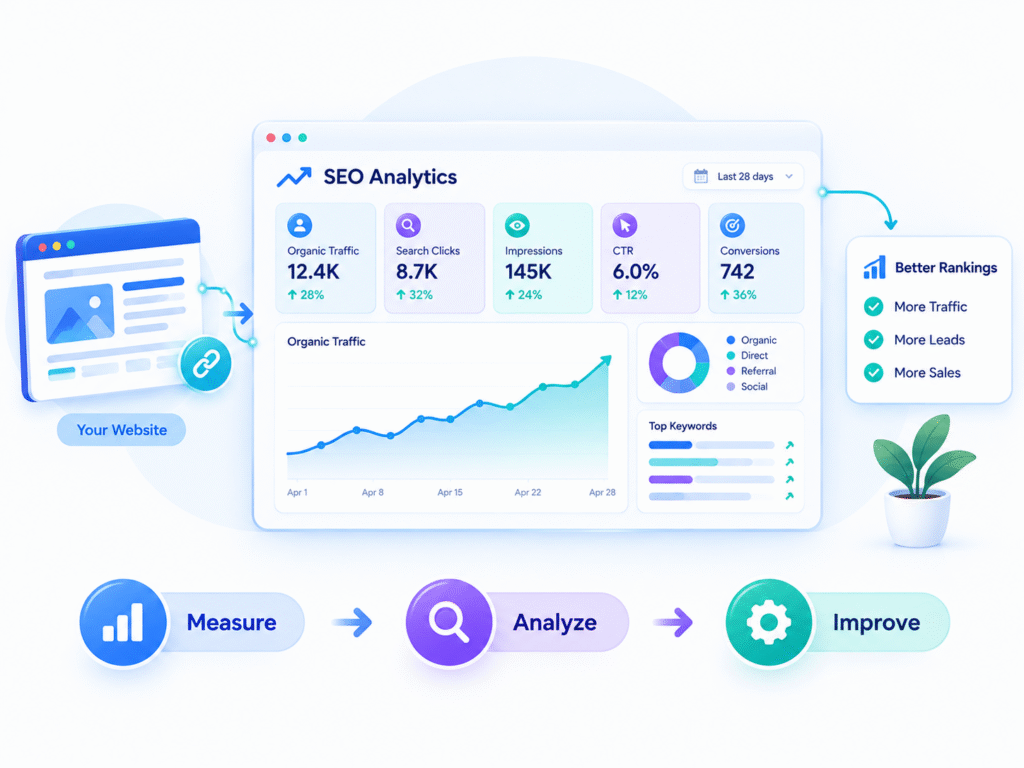
SEO is not just about improving rankings or bringing more organic traffic. A good SEO professional should also know how to measure whether those efforts are producing meaningful results.
Q86. Which SEO metrics should a beginner know?
Interview-ready answer:
A beginner should know metrics such as organic traffic, impressions, clicks, CTR, average position, conversions, engagement, and keyword rankings. The important thing is to understand what each metric tells us and how it helps evaluate SEO performance.
Q87. What are impressions, clicks and CTR?
Interview-ready answer:
Impressions are the number of times a webpage appears in search results. Clicks are the number of times users click the result. CTR (Click-Through Rate) is the percentage of impressions that result in clicks. For example, if a page gets 100 impressions and 10 clicks, its CTR is 10%.
Q88. What is the average position in Google Search Console?
Interview-ready answer:
Average position represents the average position of a website’s search results for the queries reported in Search Console. It is an average metric, so it does not mean the page always appeared at exactly that position for every search.
Q89. How do you measure SEO performance?
Interview-ready answer:
I would compare SEO performance over time using metrics such as organic traffic, impressions, clicks, CTR, rankings, and conversions. I would also compare performance by page and query to identify what is improving, what is declining, and where there are opportunities.
Q90. How would you create a basic SEO report?
Interview-ready answer:
First, I would define the reporting period and goals. Then I would collect key data from tools such as Search Console and Analytics, compare it with the previous period, highlight important changes, and explain what caused them. Finally, I would include key findings and recommended actions for the next period.
Q91. Which KPIs would you include in an SEO report?
Interview-ready answer:
I would include KPIs based on the website’s goals. Common ones are organic clicks, impressions, CTR, average position, organic traffic, important keyword performance, landing-page performance, and conversions. For a business website, conversions are especially important because traffic alone does not always mean business growth.
Q92. What is the difference between SEO traffic and SEO conversions?
Interview-ready answer:
SEO traffic refers to visitors who reach a website through organic search. SEO conversions are the valuable actions those visitors complete, such as submitting a form, making a purchase, or requesting a service. So, traffic measures visits, while conversions measure desired outcomes.
Q93. What would you investigate if organic traffic increased but conversions did not?
Interview-ready answer:
I would first check whether the additional traffic is coming from relevant keywords and landing pages. Then I would analyze user behavior, conversion tracking, landing-page relevance, search intent, and the quality of the traffic. If traffic increases but the visitors do not match the business audience, the SEO strategy may be attracting volume without attracting the right users.
Practical SEO Interview Questions
Practical SEO questions help an interviewer understand whether you can apply SEO concepts to a real website. Instead of giving only definitions, try to explain your process, reasoning, and next action.
Q94. How would you perform keyword research for a new website?
Interview-ready answer:
First, I would understand the website, its products or services, and its target audience. Then I would find relevant keyword ideas using tools such as Google Keyword Planner, Ahrefs, or Semrush. I would evaluate search intent, search demand, and competition, check the current SERP, and group relevant keywords based on the pages they should target. I would prioritize keywords that are relevant and realistic for the website.
Q95. How would you optimize a page that is not ranking?
Interview-ready answer:
I would first understand why the page is not performing. I would check whether the page matches the search intent, review the content quality and topical coverage, and compare it with relevant competing pages. I would also check important on-page and technical elements such as the title, headings, internal links, indexing, and page experience. Based on the findings, I would improve the page rather than simply adding more keywords.
Q96. How would you perform a basic SEO audit?
Interview-ready answer:
I would review the website in different areas: technical SEO, on-page SEO, content, internal linking, backlinks, and performance. I would check indexing, crawlability, broken links, redirects, titles, headings, URLs, duplicate content, sitemap, and important Search Console data. Then I would organize the findings by severity and recommend the most important actions first.
Q97. How would you analyze a competitor’s SEO strategy?
Interview-ready answer:
I would identify the competitor’s important ranking pages and analyze their target keywords, content structure, search intent, backlinks, internal linking, and SERP presence. Tools such as Ahrefs or Semrush can help with this research. I would then look for gaps where the competitor provides less useful information or where our website can create a better and more relevant result.
Q98. How would you find technical SEO problems on a website?
Interview-ready answer:
I would start with Google Search Console to check indexing and search-related issues. Then I could crawl the website using a tool such as Screaming Frog to identify broken links, redirects, missing or duplicate metadata, and other technical issues. I would also check robots.txt, XML sitemap, canonical tags, HTTPS, mobile usability, and page performance.
Q99. How would you improve a page that gets impressions but very few clicks?
Interview-ready answer:
I would first check the query and SERP to understand whether the page is relevant to the search intent. Then I would review the title and meta description to make them clearer and more compelling without misleading users. I would also check the page’s average position. If the position is already strong but CTR is low, improving how the result is presented may be more useful than making unnecessary content changes.
Q100. How would you decide which SEO issues to fix first?
Interview-ready answer:
I would prioritize issues based on impact, urgency, and effort. For example, a serious indexing problem affecting important pages would usually come before a minor metadata issue. I would also consider business value, traffic potential, and how many pages are affected. This helps focus resources on changes that can make the biggest difference instead of trying to fix everything at once.
Scenario-Based SEO Interview Questions
Scenario-based questions test whether you can think like an SEO professional when something goes wrong. In these situations, avoid jumping to conclusions. A strong answer should explain what you would check, how you would find the cause, and what action you would take.
Q101. A website suddenly loses organic traffic. What would you check first?
Interview-ready answer:
First, I would confirm the traffic drop in Google Analytics and Search Console and check when it started. Then I would compare affected pages, queries, devices, and countries. I would check for indexing or technical issues, recent website changes, ranking changes, and possible search algorithm updates. I would focus on finding the cause before making major changes.
Q102. A page is indexed but gets almost no organic traffic. What would you investigate?
Interview-ready answer:
I would check whether the page is targeting a keyword with meaningful demand and whether it matches the search intent. Then I would review its rankings, content quality, SERP competition, title and meta description, internal links, and overall relevance. Being indexed only means the page can be considered for search; it does not guarantee traffic.
Q103. A page’s ranking suddenly drops. How would you diagnose the problem?
Interview-ready answer:
I would first check when the ranking drop happened and whether it affects one page or many pages. Then I would review Search Console data, search intent, competitors, recent content or website changes, technical issues, indexing, and backlinks. I would compare the current SERP with the previous situation to understand what changed before deciding on an action.
Q104. A new page is not getting indexed. What would you check?
Interview-ready answer:
I would start with the URL Inspection tool in Search Console. I would check whether the page is accessible to search engines, whether it has any indexing restrictions, whether the canonical is correct, and whether it is included in the sitemap and linked internally. I would also review the page quality and content to make sure there is a clear reason for the page to be indexed.
Q105. A competitor starts ranking above your page. What would you analyze?
Interview-ready answer:
I would compare both pages for search intent, content quality, topical coverage, relevance, internal linking, backlinks, and overall user experience. I would also check whether the competitor is answering the query more effectively. The goal would not be to copy the competitor, but to identify gaps and improve our page where it can provide more value.
Q106. A website has hundreds of duplicate pages. What would you do?
Interview-ready answer:
First, I would identify why the duplicate pages are being created, such as URL parameters, filters, or technical issues. Then I would decide the appropriate solution based on the situation, which could include canonical tags, redirects, controlling URL generation, or other technical changes. I would also make sure internal links and sitemaps point toward the preferred URLs.
Q107. A client asks you to repeat a keyword many times to improve rankings. How would you respond?
Interview-ready answer:
I would explain that repeatedly adding a keyword does not guarantee higher rankings and can make content unnatural. Instead, I would focus on matching search intent, covering the topic thoroughly, and using relevant terms naturally. I would explain the SEO reasoning to the client and recommend improving the content rather than forcing keyword repetition.
Q108. A website has good organic traffic but very few leads. What would you investigate?
Interview-ready answer:
I would check whether the organic traffic is coming from relevant keywords and landing pages. Then I would review search intent, landing-page relevance, calls to action, conversion tracking, user experience, and the quality of the traffic. High traffic is useful only when it reaches the right audience and supports the website’s business goals.
Q109. You find 100 SEO issues but have only one day to work on them. How would you prioritize?
Interview-ready answer:
I would not try to fix all 100 issues equally. I would prioritize them based on impact, urgency, affected pages, business value, and effort. For example, a major indexing problem affecting important pages would come before a minor metadata issue. I would fix the highest-impact issues first and document the remaining issues for future work.
Common SEO Interview Mistakes Freshers Should Avoid
Knowing SEO concepts is important, but how you communicate them in an interview matters just as much. Avoid these common mistakes:
Memorizing definitions word-for-word
If you memorize an answer and the interviewer changes the wording, you may struggle. Understand the concept first and explain it in your own words.
Confusing crawling, indexing and ranking
These are different stages. Crawling means discovering or fetching pages, indexing means processing and storing information about eligible pages, and ranking means ordering relevant results for a search query.
Treating keyword density as a ranking formula
There is no ideal keyword density percentage that guarantees rankings. Focus on search intent, useful content, relevance, and natural language instead of repeatedly inserting keywords.
Saying every traffic drop is a Google penalty
A traffic drop can have many causes, including ranking changes, technical problems, seasonality, website changes, or search demand changes. Investigate the data before assuming a penalty.
Treating Domain Authority as a Google ranking factor
Domain Authority is a third-party SEO metric, not a Google ranking factor. You can use it for competitor or backlink analysis, but do not present it as something Google directly uses.
Listing SEO tools without knowing their purpose
Do not simply say, “I know Ahrefs, Semrush, and Screaming Frog.” Be ready to explain what each tool is used for and how you would apply it.
Pretending to have experience you don’t have
If you are a fresher, be honest. You can discuss projects, internships, coursework, practice websites, or what you have learned instead of inventing professional experience.
Giving a five-minute answer to a simple question
Keep simple answers short and clear. Give the definition first, add a relevant example if needed, and expand only when the interviewer asks for more detail.